| Casale Monferrato | |||
|---|---|---|---|
| — Comune — | |||
| Comune di Casale Monferrato | |||
 | |||
| |||
  Casale Monferrato | |||
| Coordinates: 45°08′N 08°27′E / 45.133°N 8.45°E | |||
| Country | Italy | ||
| Region | Piedmont | ||
| Province | Alessandria (AL) | ||
| Frazioni | Casale Popolo, Rolasco, Roncaglia, San Germano, Santa Maria del Tempio, Terranova, Vialarda [1] | ||
| Government | |||
| - Mayor | Giorgio Demezzi (Centre-Right) | ||
| Area[2] | |||
| - Total | 86.32 km2 (33.3 sq mi) | ||
| Elevation[1] | 116 m (381 ft) | ||
| Population (30 June 2009)[1] | |||
| - Total | 36,058 | ||
| - Density | 417.7/km2 (1,081.9/sq mi) | ||
| Demonym | Casalesi or Casalaschi | ||
| Time zone | CET (UTC+1) | ||
| - Summer (DST) | CEST (UTC+2) | ||
| Postal code | 15033 | ||
| Dialing code | 0142 | ||
| Patron saint | St. Evasius | ||
| Saint day | 12 November | ||
| Website | Official website | ||


Casale Monferrato, population 36,058, is a town and comune in the Piedmont region of north-west Italy, part of the province of Alessandria. It is situated about 60 km east of Turin on the right bank of the Po, where the river runs at the foot of the Montferrato hills. Beyond the river lies the vast plain of the Po valley.
Contents[hide]
|
[edit] History

The origins of the town are fairly obscure. It is known that the Gaulish settlement of Vardacate (from var = "water"; ate = "populated place") existed on the Po in this area, and that it became a Roman municipium. By the beginning of the 8th century there was a small town under Lombard rule, probably called Sedula or Sedulia. It was here (according to late and unreliable accounts) that one Saint Evasius, along with 146 followers, was decapitated on the orders of the Arian Duke Attabulo. Liutprand, King of the Lombards is said to have supported the construction of a church in honour of Evasius. Certainly the martyr’s cult flourished and by 988 the town had become known as Casale di Sant’Evasio.
At the time of Charlemagne, the town came under the temporal and religious power of the bishops of Vercelli, from which it was freed by Frederick Barbarossa, Holy Roman Emperor and King of Italy. It was sacked by the anti-imperial troops of Vercelli, Alessandria and Milan in 1215, but rebuilt and fortified in 1220. It fell under the power of the Marquess of Montferrat in 1292[citation needed], and later became the capital of the marquessate.
In 1536 it passed to the Gonzagas of Mantua, who fortified it strongly. Thereafter it was of considerable importance as a fortress.
In 1745, following the defeat of the Piedmontese army at the Battle of Bassignano, Casale was occupied by the victorious French and Spanish troops. Much damage was caused to the city’s buildings; the subsequent renovation and rebuilding in the Baroque style made a substantial contribution to the urban texture.[1][3]
It successfully resisted the Austrians in 1849, and was strengthened in 1852. Towards the end of the 19th century it became known as "Cement Capital" (capitale del cemento), thanks to the quantity of Portland cement in the hills nearby, and in the 20th century it acquired printing press and refrigerator industries.
Main sights
[edit] Piazza Mazzini and its environs


The historic centre of the town is itself centred on Piazza Mazzini, the site of the Roman forum.[4] Named for Giuseppe Mazzini, a key republican figure of the Risorgimento, it is dominated by an 1843 equestrian statue by Abbondio Sangiorgio of King Charles Albert of Piedmont-Sardinia, dressed in Roman costume, specifically as a senator, with his knees uncovered. The statue was commissioned by the municipal authorities as a mark of gratitude to the king for having selected Casale as the seat of Piedmont’s second Court of Appeal and to celebrate the construction of Casale’s first permanent bridge across the Po. Locally the square is called Piazza Cavallo (wiktionary:cavallo being the Italian word for "horse").

[edit] Cathedral (Duomo)
A little to the east of the square is the Lombard Romanesque cathedral of Sant'Evasio, originally founded in 742, rebuilt in the early 12th century and consecrated on 7 January 1107 by Pope Paschal II. It occupies a site where once was a Roman temple dedicated to Jupiter. It underwent restoration in 1706 and again in the 19th century. The cathedral has an asymmetric façade, including a complex narthex with two galleries (matronaei) connected by a tribune and closed by round arches. The interior houses the relics of Saint Evasius and, near the presbytery, fragments 11th century pavement mosaics with Biblical scenes (now remounted on the walls of the corridor from the apse to the sacristy).
[edit] San Domenico
In 1471, after William VIII, Marquess of Montferrat had chosen Casale as the permanent location of the marquisate court, construction began of the church of San Domenico, to the north of Piazza Mazzini. Work on the building ceased for some time, as a result of political instability; in the early 16th century a fine, if slightly incongruous, Renaissance portal was imposed on the late Gothic façade.
[edit] Via Lanza
Via Lanza, which runs northwards from the north-west corner of Piazza Mazzini, is known for the Krumiri Rossi bakery, which indeed produces Krumiri: biscuits which have been a speciality of Casale since their legendary invention in 1870 by one Domenico Rossi after an evening spent with friends in Piazza Mazzini’s Caffè della Concordia (now a bank). Also in Via Lanza is the 17th-century church of San Giuseppe, probably designed by Sebastiano Guala; a painting attributed to the Ursuline nun Lucrina Fetti (c.1614–1651,[5] brother of Domenico) shows Christ venerated by Sant’Evasio and includes a very accurate depiction of contemporary Casale with its civic tower. The church and convent of San Francesco, which housed the remains of many of the Marquises of Monferrato, was turned to other uses during the 18th century and demolished in the nineteenth. The high open tower which is a landmark of Via Lanza belongs to Palazzo Morelli di Popolo; it has been attributed to Bernardo Vittone, and also to Magnocavalli—both are believed to have had a hand in the refurbishment of the building.

[edit] Via Saffi
Running west from Piazza Mazzini to Piazza Castello is Via Saffi, which contains one of the town’s most recognizable landmarks: the Torre Civica. This brick tower, square in plan and 60 metres high, dates from the 11th century but suffered severe fire damage in April 1504 when a festival to celebrate the peace between Holy Roman Emperor Maximillian I and King Louis XII of France got out of hand. The reconstruction, completed six years later by Matteo Sammicheli, produced a taller structure which included the current bell-chamber. The balconies attached to the upper part of the tower were added during the period of Gonzaga rule. Subsequent restorations were carried out in 1779 (after a lightning strike which destroyed the 15th-century clock) and again in 1920.
Adjoining the tower is the church of Santo Stefano which stands on the east side of a small square named after it. The church’s origins date to the beginning of the second millennium, but it was largely rebuilt in the mid-17th century under a project attributed to Sebastiano Guala; work on the current façade began in 1787 but was not completed until the late 19th century. Inside are paintings by Giovanni Francesco Caroto (1480–1555), Il Moncalvo (1568–1625), Giorgio Alberini (1575/6 – 1625/6), and Francesco Cairo (1607–1665). Adorning both the walls and the vault are 15 tondi depicting prophets, apostles and the Virgin painted by Pietro Francesco Guala in 1757, the last year of his life.
The south side of Piazza Santo Stefano, facing back towards Via Saffi, is formed by the neo-classical Palazzo Ricci di Cereseto. The imposing façade, marked by four massive brick columns, was built in 1806 to an earlier design by the local architect Francesco Ottavio Magnocavalli.
Also in the square is a marble statue of the archaeologist and architect Luigi Canina by Benedetto Cacciatore.
[edit] Piazza Castello
Piazza Castello is a large irregularly shaped open space used as a car park and as a market square; it is dominated by the castle of the Paleologi which occupies most of its western side. The square arose in 1858 through the demolition of the castle’s eastern ravelin, and was extended in the late nineteenth/early 20th century when the remaining ravilins were removed.
[edit] The castle
The castle itself is an imposing 15th century military construction, with a hexagonal plan, four round towers and an encircling moat.

[edit] Santa Caterina
At the south-east corner of the piazza is the elegant Baroque church of Santa Maria delle Grazie, better known by its earlier designation of Santa Caterina. A master-work of Giovanni Battista Scapitta, completed after his death by Giacomo Zanetti, it is marked by an elliptical cupola, and a façade curvilinear both in plan and elevation.
[edit] Teatro Municipale

The theatre, which stands at the north-eastern corner of the piazza at the end of Via Saffi, opened in 1791 with a performance of the La moglie capricciosa, an opera buffa by Vincenzo Fabrizi. Its construction, to a design by Abbot Agostino Vitoli of Spoleto, had taken six years. However it fell into disuse during the period of Napoleonic rule and remained closed for several decades. After extensive internal embellishment, the theatre reopened in 1840 with a performance of Vincenzo Bellini’s Beatrice di Tenda. In 1861 the theatre was sold by the Società dei Nobili to the local authority (the comune) which made it more accessible to the general public. Nevertheless it fell again into decline; during World War II it was used as a store. Major restoration work took place in the 1980s and the theatre finally reopened in 1990 with a performance by Vittorio Gassmann. Since then it has offered a mixture of theatre, music and dance, while the foyer is used for exhibitions, usually photographic.
The horseshoe-shaped auditorium with stalls, four tiers of boxes and a gallery (or loggione, i.e. the gods) is richly decorated with frescoes, stucco, gilding and velvet. The curtains of the royal box hang from a structure supported on stucco caryatids by Abbondio Sangiorgio who also designed the equestrian statue in Piazza Mazzini. [6]
[edit] Via Garibaldi and Sant’Ilario
From the side of the theatre Via Garibaldi leads northwards to the 16th-century church of Sant'Ilario, founded in 380 in honour of Hilary of Poitiers. It was completely rebuilt in 1566 and was largely restructured towards the end of the 19th century. The church’s polychrome façade is of interest and it contains two important works by Niccolò Musso: the Madonna del Carmine (‘Our Lady of Mount Carmel’) and San Francesco ai piedi del Crocefisso (‘Saint Francis at the foot of the Crucifix’) originally from the church of San Francesco.

[edit] Via Roma, ghetto and synagogue
Behind the shops on the west side of Via Roma, which runs southwards from Piazza Mazzini, lay the ghetto which persisted until the emancipation of the Jews in Piedmont following Charles Albert’s concession of a constitution, the Statuto Albertino, under the revolutionary pressures of 1848. The Synagogue of Casale Monferrato is inside a building at Vicolo Olper 44 that offers no hint from its nondescript exterior that it is a synagogue, built in 1595, and recognized as one of the most beautiful in Europe. The women’s galleries now host an important Jewish museum. Of particular interest are the Tablets of the Law in gilded wood, dating from the 18th century, numerous Rimonim (finials to scrolls of the Law) and Atarot (crowns for the scrolls of the Law) carved and with silver filigree.
[edit] The Giardini pubblici and public sculpture

The public gardens which front the railway station extend westwards, dissected by various streets, almost to the southern end of Via Roma. They contain a range of monuments to figures of local and national renown including Giovanni Lanza (sculpted by Odoardo Tabacchi, 1887), Giuseppe Antonio Ottavi (Leonardo Bistolfi, 1890), Filippo Mellana (Giacomo Ginotti, 1887), and Giuseppe Garibaldi (Primo Giudici, 1884).
The most important, however, is Bistolfi’s war memorial of 1928 (pictured left). A marble exedra with four caryatids in the form of winged victories is raised on a dias fronted with steps. The bronze sculpture Il Fante Crociato, a foot soldier in crusader-period costume, takes centre stage; a second bronze a lightly robed Primavera Italica (Italic Spring) steps down from the platform and out of the ensemble.
Other public sculptures of note in Casale include the monument to King Charles Albert in Piazza Mazzini mentioned above, Bistolfi’s 1887 monument to Urbano Rattazzi in Piazza Rattazzi, Benedetto Cacciatori’s Luigi Canina in Piazza Santo Stefano.The Monumento alla difesa di Casale (Francesco Porzio, 1897; pictured right), situated to the north of the castle, commemorates the vigorous action which took place during the First Italian War of Independence in 1849 to defend the city against Austrian troops who had just taken part in the defeat of the Piedmontese army. In the Priocco district, to the south of the historic centre, in Viale Ottavio Marchino, there is a monument by Virgilio Audagna to the cement industrialist Ottavio Marchino, son of the founder of Cementi Marchino, which is now part of Buzzi Unicem.
[edit] Palazzi


The historic centre is marked by many palazzi which are often Baroque in appearance (though the substance is often earlier), reflecting the urban renewal which took place in the early decades of the 18th century. Among the best known are:
- the 15th-century palazzo of the marchesa Anna d'Alençon in Via Alessandria.
- The 15th-century Palazzo Treviso, in Via Trevigi, was restructured on behalf of the Anna d’Alençon before being given to the Dominican convent. During the Napoleonic period it was used as a lyceum and has subsequently remained in scholastic use.
- Palazzo Del Carretto, also known as the Casa Tornielli, in Via Canina, again dating from the 15th century, now housing a language school.
- The medieval Casa Biandrate, at the junction of Via Guazzo and Via Morini, has preserved its late gothic character.
- Palazzo Sannazzaro, a gothic building in Via Mameli, remodelled in the baroque style by Giacomo Zanetti (1698–1735).
- Palazzo Gozani di Treville, regarded as the most beautiful in the town and as one of the two most important works of Giovanni Battista Scapitta, the other being the church of Santa Catarina, mentioned above. The rococò atrium and courtyard are particularly praised, as is the long and gently curved façade which follows the path of Via Mameli.
- Palazzo Gozani di San Giorgio, now the town hall, was partially rebuilt in the years 1775–8 to a design by Filippo Nicolis de Robilant. The façade is of three orders with its windows surrounded by decorations in stucco. Via Mameli.
- Palazzo Magnocavalli has a façade commissioned from Giacomo Zanetti by the architect Francesco Ottavio Magnocavalli. Inside, the monumental twisted staircase, supported by two columns, fits gracefully into a very restricted space. Via Mameli.
- Palazzo Fornara, built in 1840 in the neo-classical style by the Vercellese Pietro Bosso, forms the east side of Piazza Mazzini. The site was previously occupied by the church of Santa Maria di Piazza which was deconsecrated during the Napoleonic period. Since 1925 it has been a bank.
- Palazzo Langosco, in Via Corte d’Appello, encloses part of the main cloister of the former Augustinian convent complex of Santa Croce. Once the seat of the Senate of Montferrat, it now houses the public library.
- The neo-classical Palazzo Sacchi-Nemours, beside the Teatro Civico in Via Saffi, was built in 1750–2 by the local architect Francesco Ottavio Magnocavalli.
- Palazzo Ricci di Cereseto, in Piazzetta di S. Stefano, has an imposing neo-classical façade fronted by four massive brickwork columns, constructed in 1806 by G. Battista Formiglia, probably following a design by Magnocavalli.
- Palazzo Gaspardone-Ottavi, in Via Cavour, came into the possession of the Ottavi family during the 19th century and is noted for Bistolfi’s plaque commemorating Ottavio Ottavi (an oenologist known also, in his home town, for writing the Inno ai krumiri, or ‘hymn to the krumiri biscuits’) and a memorial tablet to Saint Luigi Gonzaga.
[edit] Museums and galleries
The civic museum is located in the ancient convent of Santa Croce, whose cloister is decorated with frescos by il Moncalvo.
[edit] Music
Casale was an important center for Italian music from the 13th through the 17th centuries. During the Albigensian Crusade, Casale was a refuge for troubadours fleeing regions to the west; the music of such troubadours may have been decisive in the formation of secular Italian musical styles in the 14th century (see Music of the Trecento). In the 16th century the town was incorporated into the holdings of the Gonzaga family, who were patrons of music throughout the Renaissance.[7]
The cathedral there has in its archives polyphonic music by Jean Mouton, Andreas de Silva, and Francesco Cellavenia, as well as important prints by Giovanni Pierluigi da Palestrina and other major composers of the period. In the 17th and 18th centuries, Casale was the site for premieres of operas by Giulio Cesare Monteverdi, Pietro Guglielmi, and Pasquale Anfossi, and was the birthplace of the Swiss-Italian composer Carlo Evasio Soliva. Currently the city's musical center is the Teatro Municipale.
[edit] Economy
Casale is situated in a plain where rice cultivation is predominant, and in an area of cement-bearing hills and wineries. Casale is also well known for being the district of refrigeration, one of the main of Italy.
The district in Casale has born in Novembre 1945, with the first company called "Franger Frigor s.r.l." New companies started in 1957 "Mondial Frigori s.r.l." and many more after. Only to name few Carma S.p.A", "Cofi S.p.A", "Framec S.p.A", all of them connected in some way with "Franger Frigor" In 1965 Vendo Italy S.p.A. who sales bottle coolers and vending machines. Late '60 "Cold Car" started a new production in Refrigerated vehichles using Eutectic plates. Other companies started production in the following years: "Industra Apparecchiature Refrigerate IAR", "PastorFrigor", "GeneralFilter", "Unifrigor", "IARP" "Dena" is another company working on refrigeration filters and capillary tubes. Around 13 manufacturing companies work now in this field. Most of the production in Casale is about Vending machines, Bottle Coolers, Vertical and Horizontal Cabinet, Refrigerated trucks. In this field many are the technological innovations driven by environmental and energy efficiencies aspects which are used by those companies.
Casale is also known for the training facilities in refrigeration and air conditioning organised by Centro Studi Galileo since 1975.Centro Studi Galileo In Casale arrive more than 1000 delegates to attend the periodical courses to learn the refrigeration technique in preparation to the certification of personel.
[edit] Twin towns — Sister cities
Casale Monferrato is twinned with:
 Trnava, Slovakia, since 1967
 Weinstadt, Germany, since 2007
 Pescara, Italy, since 2009
 Gjirokastër, Albania, since 2010
[edit] Sport
The town’s football club, A.S. Casale, was founded in 1909. Within five years it achieved the twin peaks of its success: in 1913 it became the first Italian club to beat an English professional team (Reading F.C.), and in the 1913–14 season it won the Italian Championship. The team dropped out of Serie A in 1934, however, and in the 2006–7 season it is playing in Serie D/A.
During the 1970s, an annual under-21 football tournament took place in Casale Monferrato. It was named the "Caligaris" International Tournament, after Umberto Caligaris.[8]
The local basketball team, A.S. Junior Libertas Pallacanestro Casale Monferrato, was founded in 1956 and today competes in LegADue, the second tier of the sport in Italy.
[edit] Events
- Annual
- Saint Joseph’s Fair (Mostra mercato di San Giuseppe). A fair of industry, commerce, handicraft, and agriculture held since 1946. Mid-March; Cittadella.
- Rice and Roses (Riso&Rose). A festival of concerts, pageants, markets and other events held in and around Casale since 2001. May.
- Folkermesse (from Folk + Kermesse). The world folk music and dance festival, first staged in Casale in 1983, includes the town on its summer itinerary. July–September.
- Magiche Figure. Exhibition of puppet theatre from Italy and abroad. September.
- Festival of Wine and the Monferrato. A celebration of local wine and food together with related events. Mid-September.
- Monthly
- Antiques market. Founded in 1973, this popular market is held on the second weekend of the month (except August) in the Mercato Pavia.
- The Artemista craft market and Il Paniere market of organic produce market are held on the third Saturday of each month in Piazza Mazzini.
- Casale Open City (Casale Città Aperta, a play on the title of the classic neorealist film Roma, città aperta). Many of the town’s monuments are open, with free guided tours on the Sunday afternoon. Second weekend of the month.
- Twice weekly
- Market days. Tuesday and Friday; Piazza Castello.
[edit] People
Notable people born in Casale, or with close connections to the town, include:
- Evasius (died 3rd, 4th, or 8th century, perhaps), martyr and patron saint of the town.
- Ubertino da Casale (1259–1329), Franciscan preacher and theologian.
- Yolande of Montferrat (1274–1317), became Eirene, Empress-Consort of Andronikos II Palaiologos, Byzantine emperor.
- Facino Cane (1360–1412), condottiere.
- William VIII (1420–1483), the Marquess of Montferrat who established Casale as its definitive capital.
- Boniface III ((1424–1494)), Marquess of Montferrat.
- Giovanni Martino Spanzotti (born circa 1455), painter,
- William IX (1486–1518), Marquess of Montferrat.
- Anna d'Alençon (1492–1562), Marchioness of Montferrat.
- Bianca Maria Gaspardone (died 1526), the rich heiress who became wife to Ermes Visconti and to the Count of Cellant, (and mistress to many more) before her public execution in Milan.[9]
- John George (1488–1533), Marquess of Montferrat.
- Boniface IV (1512–1530), Marquess of Montferrat.
- Stefano Guazzo (1530–1593), founder of the Casale literary academy the Illustrati.
- Niccolò Musso (c.1590 – c.1623), painter of the Baroque period.
- Camilla Faà di Bruno (c.1599-1662), the ‘Bella Ardizzina’ who secretly married Francesco Gonzaga Duke of Ferrara and of Montferrat.
- Ferdinando del Cairo (1666–1748), a painter of the Italian Baroque school, was born in Casale.
- Giacomo Zanetti (1698–1735), master-builder and architect who completed the baroque reconstruction of Santa Caterina, and built several palazzi in the town.
- Pietro Francesco Guala (1698–1757), painter of the Piedmontese Baroque school.
- Francesco Ottavio Magnocavalli (1707–89), architect.
- Carlo Cozio, Count of Montiglio and Salabue (1715–1780), chess player.
- Carlo Vidua, Count of Conzano (1785–1830), traveller and archeologist.
- Carlo Evasio Soliva (1791–1853), musician.
- Luigi Canina (1795–1856), archaeologist and architect.
- Joseph Rocchietti, the earliest known Italian-American novelist, was an emigrant from Casale.
- Giovanni Lanza (1810–1882), politician.
- Ascanio Sobrero (1812–1888), chemist.
- Eleuterio Pagliano (1826–1903), painter.
- Luigi Hugues (1836–1913), engineer, geographer and musician.
- Francesco Negri (1841–1924), photographer.
- Giovanni Celoria (1842–1920), astronomer.
- Giulio Viotte (1845–78), artist.
- Giovanni Camerana (1845–1905), magistrate, poet, art critic: one of the prime members of the scapigliatura movement.
- Leonardo Bistolfi (1859–1933), sculptor.
- Leandro Bisiach (1864–1946), a violin maker.
- Ugo Cavallero (1880–1943), military commander.
- Cesare Maria De Vecchi (1884–1959), politician.
- Umberto Caligaris (1901–1940), footballer.
- Egidio Ortona (1911–1996), diplomat.
- Augusto Segre (1915–1986), writer and antifascist.
- Giampaolo Pansa (born 1935), journalist and writer.
- Sergio Castelletti (born 1937), footballer.
- Giovanni Piana (born 5 April 1940), philosopher.
- Roberto Bolle (born 1975), ballet dancer, was born in Casale, although he grew up in Trino Vercellese.
-

Portrait of Anna d’Alençon by Macrino d’Alba
-
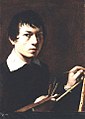
Niccolò Musso, self portrait


[edit] Fictional Casale
A siege of the town plays a significant off-stage role in Alessandro Manzoni’s’s novel The Betrothed, and is the centre of Chapter 2 of the novel The Island of the Day Before by Umberto Eco, who was born in neighbouring Alessandria. Casale also appears in a best-selling historical yarn Bellarion the Fortunate by the Anglo Italian writer Rafael Sabatini. A real 13th century personality, Ubertino of Casale, is a character in Eco's historical novel The Name of the Rose (1980).
[edit] Gallery
-

Piazza Santo Stefano
-

Church of Santo Stefano
-

The Castle
-

The Torre Civica
-
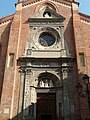
San Domenico
-
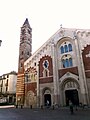
The cathedral of Sant’Evasio


[edit] References and footnotes
- General
 This article incorporates text from a publication now in the public domain: Chisholm, Hugh, ed (1911). Encyclopædia Britannica (11th ed.). Cambridge University Press.
- Some of the content of this article comes from the equivalent Italian-language Wikipedia article (retrieved September 10, 2005).

- Grignolio, Idro (1983). Casale Monferrato. Casale Monferrato: Media editrice.
- History
- Grignolio (see above)
- The historic centre
- Grignolio (see above)
- Casale città aperta (2002 pamphlet produced by the Museo Civico)
- Music
- Crawford, David: 'Casale Monferrato', Grove Music Online ed. L. Macy (Accessed December 18, 2005), <http://www.grovemusic.com>.
- Events
- Ente Manifestazioni - Casale Monferrato - AL - Italy (Italian)
- Profilo della città di Casale Monferrato (Italian)
- Ethnosuoni - Folkermesse (Italian)
- Footnotes
- ^ a b c d "Profilo della Città". Comune di Casale Monferrato. http://www.comune.casale-monferrato.al.it/IT/cityhall/profilo_citta.asp?pid=CH_PROFILO. Retrieved 2010-09-01.
- ^ Piemonte in cifre: Annuario statistico regionale
- ^ Grignolio, p.15
- ^ Stillwell, Richard, ed (1976). "VARDAGATE (Casale Monferrato) Piedmont, Italy". The Princeton Encyclopedia of Classical Sites. Princeton, N.J.: Princeton University Press. ISBN 0691035423. http://icarus.umkc.edu/sandbox/perseus/pecs/page.4788.a.php
- ^ For the dates of birth and death see "Lucrina Fetti". http://www.arabafelice.it/dominae/scheda.php?id=10046.
- ^ "Teatro municipale". Comune di Casale Monferrato. http://www.comune.casale-monferrato.al.it/IT/education/teatromunicipale.asp.
- ^ Crawford, Grove online
- ^ "The Forgotten Italian Job of 1974" - Blackpool-mad.co.uk
- ^ John Marston The Insatiate Countess, ed. by Giorgio Melchiori (Manchester: Manchester University Press, 1984), p. 20.
[edit] External links
 Media related to Casale Monferrato at Wikimedia Commons
- Official town website (Italian)
- The article on Casale Monferrato in the 1913 Catholic Encyclopedia includes a brief history of the Diocese of Casale Monferrato.
- Duomo di Casale Monferrato (Italian), official site of the city’s cathedral.
- Il Monferrato on line (Italian), site of the local newspaper.
- MonferratoArte (Italian) A historical and bibliographical directory of artists active in the extra-urban Churches of the Diocese of Casale Monferrato.

